Buy metal-lathes.net ?
We are moving the project
metal-lathes.net .
Are you interested in purchasing the domain
metal-lathes.net ?
domain@kv-gmbh.de · 0541-91531010
Buy metal-lathes.net ?
Why do delocalized π-electrons stabilize the ring?
Delocalized π-electrons stabilize the ring because they can spread out over a larger area, which lowers the overall energy of the molecule. This delocalization allows the electrons to move more freely and reduces the repulsion between them, leading to a more stable structure. Additionally, the delocalized electrons can interact with neighboring atoms or molecules, further stabilizing the ring. Overall, the delocalization of π-electrons increases the overall stability of the ring structure. **
Is π times d and π times r^2 the same?
No, π times d and π times r^2 are not the same. π times d represents the circumference of a circle, where d is the diameter. On the other hand, π times r^2 represents the area of a circle, where r is the radius. These two calculations represent different properties of a circle and therefore result in different values. **


Similar search terms for Π-electrons
Top-Angebote
Products related to Π-electrons:
-
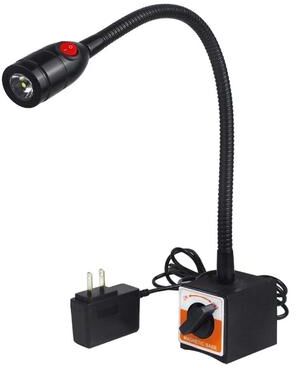
Multicon Wholesale Hub Premium Magnetic Base LED Work Light With Adjustable Flexible Gooseneck For CNC & Lathe Machines Premium Magnetic Base LED Work Light With Adjustable Flexible Gooseneck For CNC & Lathe MachinesStep up your workshop lighting and never miss a detail again with this magnetic base LED work light designed for machinists and DIY professionals alike. This precision CNC machine lamp brings bright, focused illumination right where you need...89,97 $*Shipping: 0,00 $Secure redirect to the provider
-
All Categories Goods Magnetic LED Work Light With Flexible Gooseneck CNC Machine Lamp Adjustable Lathe Work Light Magnetic LED Work Light With Flexible Gooseneck CNC Machine Lamp Adjustable Lathe Work LightStart every job with confidence using this magnetic LED work light designed for professionals and hobbyists alike. Built to deliver bright, consistent illumination exactly where you need it, this flexible gooseneck machine lamp stays firmly in place...127,97 $*Shipping: 0,00 $Secure redirect to the provider



-
Is π times d the same as π times r^2?
No, π times d (diameter) is not the same as π times r^2 (radius squared). The formula for the circumference of a circle is π times the diameter, while the formula for the area of a circle is π times the radius squared. The diameter is twice the length of the radius, so they are not equivalent in these formulas. **
-
Is sin(x + π/2) simply the sine function shifted π/2 to the left?
No, sin(x + π/2) is not simply the sine function shifted π/2 to the left. The function sin(x + π/2) is equivalent to the cosine function, as sin(x + π/2) = cos(x). This is because the sine function and the cosine function are related by a phase shift of π/2. Therefore, sin(x + π/2) is not just a horizontal shift of the sine function, but rather a transformation to the cosine function. **
-
Why do metal atoms like to give away electrons?
Metal atoms like to give away electrons because they have relatively low ionization energies, meaning it requires less energy for them to lose electrons. By giving away electrons, metal atoms can achieve a stable electron configuration similar to that of noble gases, which have full outer electron shells. This stability is achieved by forming positively charged ions, which allows metal atoms to decrease their overall energy and become more stable. **
-
How can one prove that e or π is irrational?
One can prove that e or π is irrational by assuming the opposite, that is, assuming that e or π can be expressed as a ratio of two integers. By using properties of irrational numbers and mathematical techniques such as proof by contradiction, one can show that e or π cannot be written as a simple fraction. This demonstrates that e or π is irrational. **


Are photons electrons?
No, photons are not electrons. Photons are elementary particles that make up light and electromagnetic radiation, while electrons are negatively charged subatomic particles that are part of atoms. Photons have no mass and travel at the speed of light, while electrons have mass and are bound to the nucleus of an atom. **
Why is cos(x) actually equal to sin(x + π/2)?
The reason why cos(x) is equal to sin(x + π/2) is because of the relationship between the sine and cosine functions. The cosine function represents the x-coordinate of a point on the unit circle, while the sine function represents the y-coordinate. When you shift the angle by π/2 radians, you are essentially rotating the point on the unit circle counterclockwise by 90 degrees. This rotation changes the x-coordinate to the y-coordinate, hence why cos(x) = sin(x + π/2). **
Top-Angebote
Products related to Π-electrons:
-
Uplifted Finds New Hanging Spiral Rattle Stroller Toy Soft Plush Crib Car Seat Lathe Activity Toy New Hanging Spiral Rattle Stroller Toy Soft Plush Crib Car Seat Lathe Activity ToyKeep your infant entertained and engaged with this New Hanging Spiral Rattle Stroller Toy. This versatile Infant Baby Toy easily wraps around Cribs, Car Seats, and Strollers, making it the perfect Travel Activity Toy for onthego parents. Featuring...171,97 $*Shipping: 0,00 $Secure redirect to the provider
-
Why do delocalized π-electrons stabilize the ring?
Delocalized π-electrons stabilize the ring because they can spread out over a larger area, which lowers the overall energy of the molecule. This delocalization allows the electrons to move more freely and reduces the repulsion between them, leading to a more stable structure. Additionally, the delocalized electrons can interact with neighboring atoms or molecules, further stabilizing the ring. Overall, the delocalization of π-electrons increases the overall stability of the ring structure. **
-
Is π times d and π times r^2 the same?
No, π times d and π times r^2 are not the same. π times d represents the circumference of a circle, where d is the diameter. On the other hand, π times r^2 represents the area of a circle, where r is the radius. These two calculations represent different properties of a circle and therefore result in different values. **
-
Is π times d the same as π times r^2?
No, π times d (diameter) is not the same as π times r^2 (radius squared). The formula for the circumference of a circle is π times the diameter, while the formula for the area of a circle is π times the radius squared. The diameter is twice the length of the radius, so they are not equivalent in these formulas. **
-
Is sin(x + π/2) simply the sine function shifted π/2 to the left?
No, sin(x + π/2) is not simply the sine function shifted π/2 to the left. The function sin(x + π/2) is equivalent to the cosine function, as sin(x + π/2) = cos(x). This is because the sine function and the cosine function are related by a phase shift of π/2. Therefore, sin(x + π/2) is not just a horizontal shift of the sine function, but rather a transformation to the cosine function. **
Similar search terms for Π-electrons
-
Multicon Wholesale Hub Premium Magnetic Base LED Work Light With Adjustable Flexible Gooseneck For CNC & Lathe Machines Premium Magnetic Base LED Work Light With Adjustable Flexible Gooseneck For CNC & Lathe MachinesStep up your workshop lighting and never miss a detail again with this magnetic base LED work light designed for machinists and DIY professionals alike. This precision CNC machine lamp brings bright, focused illumination right where you need...89,97 $*Shipping: 0,00 $Secure redirect to the provider
-
All Categories Goods Magnetic LED Work Light With Flexible Gooseneck CNC Machine Lamp Adjustable Lathe Work Light Magnetic LED Work Light With Flexible Gooseneck CNC Machine Lamp Adjustable Lathe Work LightStart every job with confidence using this magnetic LED work light designed for professionals and hobbyists alike. Built to deliver bright, consistent illumination exactly where you need it, this flexible gooseneck machine lamp stays firmly in place...127,97 $*Shipping: 0,00 $Secure redirect to the provider
-
All Categories Goods Heavy Duty Magnetic Base Work Light With Flexible Gooseneck LED Lamp For Lathe & CNC Milling Machines Heavy Duty Magnetic Base Work Light With Flexible Gooseneck LED Lamp For Lathe & CNC Milling MachinesStep into a brighter, more precise workspace with the magnetic base work light that machinists and DIYers love. Designed to deliver focused illumination exactly where you need it, this gooseneck LED lamp makes detailed work on lathes and CNC mills...79,97 $*Shipping: 0,00 $Secure redirect to the provider
-
Why do metal atoms like to give away electrons?
Metal atoms like to give away electrons because they have relatively low ionization energies, meaning it requires less energy for them to lose electrons. By giving away electrons, metal atoms can achieve a stable electron configuration similar to that of noble gases, which have full outer electron shells. This stability is achieved by forming positively charged ions, which allows metal atoms to decrease their overall energy and become more stable. **
-
How can one prove that e or π is irrational?
One can prove that e or π is irrational by assuming the opposite, that is, assuming that e or π can be expressed as a ratio of two integers. By using properties of irrational numbers and mathematical techniques such as proof by contradiction, one can show that e or π cannot be written as a simple fraction. This demonstrates that e or π is irrational. **
-
Are photons electrons?
No, photons are not electrons. Photons are elementary particles that make up light and electromagnetic radiation, while electrons are negatively charged subatomic particles that are part of atoms. Photons have no mass and travel at the speed of light, while electrons have mass and are bound to the nucleus of an atom. **
-
Why is cos(x) actually equal to sin(x + π/2)?
The reason why cos(x) is equal to sin(x + π/2) is because of the relationship between the sine and cosine functions. The cosine function represents the x-coordinate of a point on the unit circle, while the sine function represents the y-coordinate. When you shift the angle by π/2 radians, you are essentially rotating the point on the unit circle counterclockwise by 90 degrees. This rotation changes the x-coordinate to the y-coordinate, hence why cos(x) = sin(x + π/2). **
* All prices are inclusive of VAT and, if applicable, plus shipping costs. The offer information is based on the details provided by the respective shop and is updated through automated processes. Real-time updates do not occur, so deviations can occur in individual cases. ** Note: Parts of this content were created by AI.