Buy metal-lathes.net ?
We are moving the project
metal-lathes.net .
Are you interested in purchasing the domain
metal-lathes.net ?
domain@kv-gmbh.de · 0541-91531010
Buy metal-lathes.net ?
What is the degree of homogeneity?
The degree of homogeneity refers to the level of uniformity or similarity within a group or population. It measures the extent to which the individuals or elements within the group are alike in terms of certain characteristics or attributes. A high degree of homogeneity indicates a high level of similarity, while a low degree of homogeneity indicates a greater diversity or variation within the group. This concept is often used in statistics, sociology, and other fields to analyze and understand the composition and characteristics of a given group. **
Was the degree of homogeneity correctly calculated?
Yes, the degree of homogeneity was correctly calculated. The formula used to calculate homogeneity takes into account the number of categories and the distribution of values within those categories, providing an accurate measure of how similar or different the data points are. By applying this formula to the dataset, the degree of homogeneity was determined accurately. **


Similar search terms for Homogeneity
Top-Angebote
Products related to Homogeneity:
-
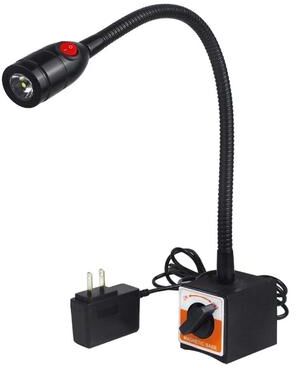
Multicon Wholesale Hub Premium Magnetic Base LED Work Light With Adjustable Flexible Gooseneck For CNC & Lathe Machines Premium Magnetic Base LED Work Light With Adjustable Flexible Gooseneck For CNC & Lathe MachinesStep up your workshop lighting and never miss a detail again with this magnetic base LED work light designed for machinists and DIY professionals alike. This precision CNC machine lamp brings bright, focused illumination right where you need...89,97 $*Shipping: 0,00 $Secure redirect to the provider
-
All Categories Goods Magnetic LED Work Light With Flexible Gooseneck CNC Machine Lamp Adjustable Lathe Work Light Magnetic LED Work Light With Flexible Gooseneck CNC Machine Lamp Adjustable Lathe Work LightStart every job with confidence using this magnetic LED work light designed for professionals and hobbyists alike. Built to deliver bright, consistent illumination exactly where you need it, this flexible gooseneck machine lamp stays firmly in place...127,97 $*Shipping: 0,00 $Secure redirect to the provider


-
Was the degree of homogeneity calculated correctly?
Yes, the degree of homogeneity was calculated correctly. The formula used to calculate homogeneity takes into account the differences between the observed frequencies and the expected frequencies under the null hypothesis. By comparing these values and calculating the chi-square statistic, we can determine the degree of homogeneity in the data. **
-
How can one check for homogeneity in mathematics?
One can check for homogeneity in mathematics by examining whether a mathematical expression or equation remains unchanged when all its variables are scaled by a common factor. For example, in an equation like ax + by = c, if we multiply both sides of the equation by a constant k, the equation remains unchanged if a and b are both multiplied by k. This property is known as homogeneity. Another way to check for homogeneity is to verify that the dimensions of all terms in an equation are consistent, meaning that they have the same units. If an equation is homogeneous, it means that it is invariant under scaling, which can be a useful property in mathematical analysis and modeling. **
-
What distinguishes a wood lathe from a metal lathe?
A wood lathe is specifically designed for working with wood, while a metal lathe is designed for working with metal. Wood lathes typically have lower speed ranges and higher torque to accommodate the softer and less dense nature of wood, while metal lathes have higher speed ranges and lower torque to handle the harder and denser nature of metal. Additionally, wood lathes often have features such as adjustable tool rests and tailstocks to accommodate the unique shapes and sizes of wood pieces, while metal lathes may have features such as coolant systems and chip trays to manage the heat and debris generated during metalworking. **
-
Is the precision mechanic similar to the machining mechanic?
While both precision mechanics and machining involve working with tools to create precise components, they are not exactly the same. Precision mechanics typically focuses on creating intricate and delicate components with high accuracy, often used in industries like watchmaking or electronics. Machining, on the other hand, involves using various tools to shape and cut raw materials into specific shapes and sizes, commonly used in industries like automotive or aerospace. Both mechanics require attention to detail and precision, but they differ in their specific applications and techniques. **


Is the Levene test for homogeneity of variances the same as one-way ANOVA?
No, the Levene test for homogeneity of variances is a separate statistical test used to assess whether the variances of the groups being compared in an ANOVA are equal. On the other hand, one-way ANOVA is a hypothesis test used to determine whether there are statistically significant differences between the means of three or more independent groups. The Levene test is often conducted before performing an ANOVA to ensure that the assumption of homogeneity of variances is met. **
Is the Levene test for homogeneity of variances the same as the one-way ANOVA?
No, the Levene test for homogeneity of variances is a separate statistical test from the one-way ANOVA. The Levene test is used to determine if the variances of the groups being compared in an ANOVA are equal. It tests the null hypothesis that the variances are equal across all groups. On the other hand, the one-way ANOVA is used to test the null hypothesis that the means of the groups are equal. While both tests are related to comparing groups, they are testing different aspects of the data. **
Top-Angebote
Products related to Homogeneity:
-
Uplifted Finds New Hanging Spiral Rattle Stroller Toy Soft Plush Crib Car Seat Lathe Activity Toy New Hanging Spiral Rattle Stroller Toy Soft Plush Crib Car Seat Lathe Activity ToyKeep your infant entertained and engaged with this New Hanging Spiral Rattle Stroller Toy. This versatile Infant Baby Toy easily wraps around Cribs, Car Seats, and Strollers, making it the perfect Travel Activity Toy for onthego parents. Featuring...171,97 $*Shipping: 0,00 $Secure redirect to the provider
-
What is the degree of homogeneity?
The degree of homogeneity refers to the level of uniformity or similarity within a group or population. It measures the extent to which the individuals or elements within the group are alike in terms of certain characteristics or attributes. A high degree of homogeneity indicates a high level of similarity, while a low degree of homogeneity indicates a greater diversity or variation within the group. This concept is often used in statistics, sociology, and other fields to analyze and understand the composition and characteristics of a given group. **
-
Was the degree of homogeneity correctly calculated?
Yes, the degree of homogeneity was correctly calculated. The formula used to calculate homogeneity takes into account the number of categories and the distribution of values within those categories, providing an accurate measure of how similar or different the data points are. By applying this formula to the dataset, the degree of homogeneity was determined accurately. **
-
Was the degree of homogeneity calculated correctly?
Yes, the degree of homogeneity was calculated correctly. The formula used to calculate homogeneity takes into account the differences between the observed frequencies and the expected frequencies under the null hypothesis. By comparing these values and calculating the chi-square statistic, we can determine the degree of homogeneity in the data. **
-
How can one check for homogeneity in mathematics?
One can check for homogeneity in mathematics by examining whether a mathematical expression or equation remains unchanged when all its variables are scaled by a common factor. For example, in an equation like ax + by = c, if we multiply both sides of the equation by a constant k, the equation remains unchanged if a and b are both multiplied by k. This property is known as homogeneity. Another way to check for homogeneity is to verify that the dimensions of all terms in an equation are consistent, meaning that they have the same units. If an equation is homogeneous, it means that it is invariant under scaling, which can be a useful property in mathematical analysis and modeling. **
Similar search terms for Homogeneity
-
Multicon Wholesale Hub Premium Magnetic Base LED Work Light With Adjustable Flexible Gooseneck For CNC & Lathe Machines Premium Magnetic Base LED Work Light With Adjustable Flexible Gooseneck For CNC & Lathe MachinesStep up your workshop lighting and never miss a detail again with this magnetic base LED work light designed for machinists and DIY professionals alike. This precision CNC machine lamp brings bright, focused illumination right where you need...89,97 $*Shipping: 0,00 $Secure redirect to the provider
-
All Categories Goods Magnetic LED Work Light With Flexible Gooseneck CNC Machine Lamp Adjustable Lathe Work Light Magnetic LED Work Light With Flexible Gooseneck CNC Machine Lamp Adjustable Lathe Work LightStart every job with confidence using this magnetic LED work light designed for professionals and hobbyists alike. Built to deliver bright, consistent illumination exactly where you need it, this flexible gooseneck machine lamp stays firmly in place...127,97 $*Shipping: 0,00 $Secure redirect to the provider
-
Multicon Wholesale Hub Magnetic Base Work Light LED Machine Light With Flexible Gooseneck For CNC Lathe & Workshop Task Lighting Magnetic Base Work Light LED Machine Light With Flexible Gooseneck For CNC Lathe & Workshop Task LightingElevate every job, big or small, with lighting that puts precision and confidence at your fingertips. The magnetic base work light is designed for machinists, metalworkers, and home workshop enthusiasts who need clear, shadowfree illumination right...139,97 $*Shipping: 0,00 $Secure redirect to the provider
-
All Categories Goods Heavy Duty Magnetic Base Work Light With Flexible Gooseneck LED Lamp For Lathe & CNC Milling Machines Heavy Duty Magnetic Base Work Light With Flexible Gooseneck LED Lamp For Lathe & CNC Milling MachinesStep into a brighter, more precise workspace with the magnetic base work light that machinists and DIYers love. Designed to deliver focused illumination exactly where you need it, this gooseneck LED lamp makes detailed work on lathes and CNC mills...79,97 $*Shipping: 0,00 $Secure redirect to the provider
-
What distinguishes a wood lathe from a metal lathe?
A wood lathe is specifically designed for working with wood, while a metal lathe is designed for working with metal. Wood lathes typically have lower speed ranges and higher torque to accommodate the softer and less dense nature of wood, while metal lathes have higher speed ranges and lower torque to handle the harder and denser nature of metal. Additionally, wood lathes often have features such as adjustable tool rests and tailstocks to accommodate the unique shapes and sizes of wood pieces, while metal lathes may have features such as coolant systems and chip trays to manage the heat and debris generated during metalworking. **
-
Is the precision mechanic similar to the machining mechanic?
While both precision mechanics and machining involve working with tools to create precise components, they are not exactly the same. Precision mechanics typically focuses on creating intricate and delicate components with high accuracy, often used in industries like watchmaking or electronics. Machining, on the other hand, involves using various tools to shape and cut raw materials into specific shapes and sizes, commonly used in industries like automotive or aerospace. Both mechanics require attention to detail and precision, but they differ in their specific applications and techniques. **
-
Is the Levene test for homogeneity of variances the same as one-way ANOVA?
No, the Levene test for homogeneity of variances is a separate statistical test used to assess whether the variances of the groups being compared in an ANOVA are equal. On the other hand, one-way ANOVA is a hypothesis test used to determine whether there are statistically significant differences between the means of three or more independent groups. The Levene test is often conducted before performing an ANOVA to ensure that the assumption of homogeneity of variances is met. **
-
Is the Levene test for homogeneity of variances the same as the one-way ANOVA?
No, the Levene test for homogeneity of variances is a separate statistical test from the one-way ANOVA. The Levene test is used to determine if the variances of the groups being compared in an ANOVA are equal. It tests the null hypothesis that the variances are equal across all groups. On the other hand, the one-way ANOVA is used to test the null hypothesis that the means of the groups are equal. While both tests are related to comparing groups, they are testing different aspects of the data. **
* All prices are inclusive of VAT and, if applicable, plus shipping costs. The offer information is based on the details provided by the respective shop and is updated through automated processes. Real-time updates do not occur, so deviations can occur in individual cases. ** Note: Parts of this content were created by AI.