Buy metal-lathes.net ?
We are moving the project
metal-lathes.net .
Are you interested in purchasing the domain
metal-lathes.net ?
domain@kv-gmbh.de · 0541-91531010
Buy metal-lathes.net ?
What are proportion problems?
Proportion problems involve comparing two ratios or fractions to determine if they are equal. These problems often involve finding an unknown quantity in a given proportion. Proportion problems can be solved using cross multiplication or by setting up equivalent fractions. They are commonly used in various real-life situations such as cooking, finance, and geometry. **
What are proportion equations?
Proportion equations are mathematical expressions that show the equality of two ratios. They are used to compare the relationship between two sets of numbers or quantities. In a proportion equation, the cross products of the ratios are equal, meaning that the product of the first term in one ratio and the second term in the other ratio is equal to the product of the second term in the first ratio and the first term in the second ratio. Proportion equations are commonly used in various real-life situations, such as in cooking recipes, financial calculations, and solving problems involving similar figures. **

Similar search terms for Proportion
Top-Angebote
Products related to Proportion:
-
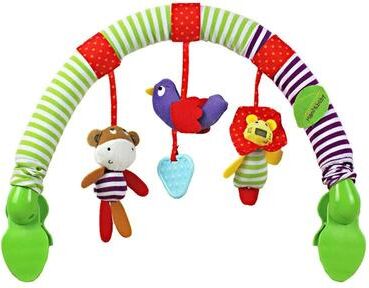
Uplifted Finds New Hanging Spiral Rattle Stroller Toy Soft Plush Crib Car Seat Lathe Activity Toy New Hanging Spiral Rattle Stroller Toy Soft Plush Crib Car Seat Lathe Activity ToyKeep your infant entertained and engaged with this New Hanging Spiral Rattle Stroller Toy. This versatile Infant Baby Toy easily wraps around Cribs, Car Seats, and Strollers, making it the perfect Travel Activity Toy for onthego parents. Featuring...171,97 $*Shipping: 0,00 $Secure redirect to the provider
-
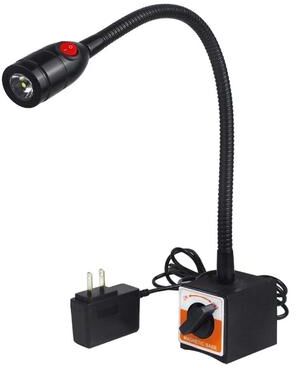
All Categories Goods Magnetic LED Work Light With Flexible Gooseneck CNC Machine Lamp Adjustable Lathe Work Light Magnetic LED Work Light With Flexible Gooseneck CNC Machine Lamp Adjustable Lathe Work LightStart every job with confidence using this magnetic LED work light designed for professionals and hobbyists alike. Built to deliver bright, consistent illumination exactly where you need it, this flexible gooseneck machine lamp stays firmly in place...127,97 $*Shipping: 0,00 $Secure redirect to the provider
-
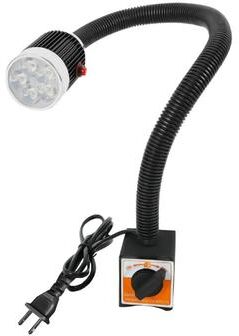
Multicon Wholesale Hub Premium Magnetic Base LED Work Light With Adjustable Flexible Gooseneck For CNC & Lathe Machines Premium Magnetic Base LED Work Light With Adjustable Flexible Gooseneck For CNC & Lathe MachinesStep up your workshop lighting and never miss a detail again with this magnetic base LED work light designed for machinists and DIY professionals alike. This precision CNC machine lamp brings bright, focused illumination right where you need...89,97 $*Shipping: 0,00 $Secure redirect to the provider
-
All Categories Goods Heavy Duty Magnetic Base Work Light With Flexible Gooseneck LED Lamp For Lathe & CNC Milling Machines Heavy Duty Magnetic Base Work Light With Flexible Gooseneck LED Lamp For Lathe & CNC Milling MachinesStep into a brighter, more precise workspace with the magnetic base work light that machinists and DIYers love. Designed to deliver focused illumination exactly where you need it, this gooseneck LED lamp makes detailed work on lathes and CNC mills...79,97 $*Shipping: 0,00 $Secure redirect to the provider


-
Is my proportion correct?
To determine if your proportion is correct, you should compare it to a known or expected value. If your proportion matches the expected value or falls within an acceptable range, then it is likely correct. You can also use statistical tests to assess the significance of your proportion. Additionally, double-check your calculations and ensure that your sample size is appropriate for making accurate inferences. **
-
What is an inverse proportion function?
An inverse proportion function is a mathematical relationship between two variables where one variable increases as the other variable decreases, and vice versa. In an inverse proportion function, as one variable doubles, the other variable is halved, and so on. This relationship is typically represented by the equation y = k/x, where y is one variable, x is the other variable, and k is a constant. **
-
How do you calculate a proportion?
To calculate a proportion, you need to first determine the total number of items or individuals in the group you are interested in. Then, identify the specific subset of items or individuals that you are focusing on. Finally, divide the number of items in the subset by the total number of items in the group and multiply the result by 100 to get the proportion as a percentage. This will give you a numerical representation of the relationship between the subset and the total group. **
-
Is my three-part proportion correct?
To determine if your three-part proportion is correct, you should first ensure that the corresponding terms are correctly aligned. Then, you can cross-multiply to check if the equation holds true. If the cross-products are equal, then your three-part proportion is correct. Additionally, you can also solve for the missing term to verify if it satisfies the proportion. **

Can you solve the task using a compound proportion? I can only handle the simple proportion.
Yes, the task can be solved using a compound proportion. In a compound proportion, there are multiple ratios involved, making it suitable for situations where there are more than two quantities being compared. However, if you are more comfortable with simple proportions, you can still solve the task by breaking it down into smaller steps and using multiple simple proportions to find the solution. **
How is a compound proportion set up?
A compound proportion is set up by comparing two ratios to determine if they are equivalent. To set up a compound proportion, you would write the two ratios as fractions, with one ratio on the left side of the equation and the other ratio on the right side. Then, you cross multiply the fractions to check if the two ratios are in proportion. If the cross products are equal, then the two ratios are in proportion. **
Top-Angebote
Products related to Proportion:
-
Uplifted Finds New Hanging Spiral Rattle Stroller Toy Soft Plush Crib Car Seat Lathe Activity Toy New Hanging Spiral Rattle Stroller Toy Soft Plush Crib Car Seat Lathe Activity ToyKeep your infant entertained and engaged with this New Hanging Spiral Rattle Stroller Toy. This versatile Infant Baby Toy easily wraps around Cribs, Car Seats, and Strollers, making it the perfect Travel Activity Toy for onthego parents. Featuring...171,97 $*Shipping: 0,00 $Secure redirect to the provider
-
All Categories Goods Magnetic LED Work Light With Flexible Gooseneck CNC Machine Lamp Adjustable Lathe Work Light Magnetic LED Work Light With Flexible Gooseneck CNC Machine Lamp Adjustable Lathe Work LightStart every job with confidence using this magnetic LED work light designed for professionals and hobbyists alike. Built to deliver bright, consistent illumination exactly where you need it, this flexible gooseneck machine lamp stays firmly in place...127,97 $*Shipping: 0,00 $Secure redirect to the provider
-
What are proportion problems?
Proportion problems involve comparing two ratios or fractions to determine if they are equal. These problems often involve finding an unknown quantity in a given proportion. Proportion problems can be solved using cross multiplication or by setting up equivalent fractions. They are commonly used in various real-life situations such as cooking, finance, and geometry. **
-
What are proportion equations?
Proportion equations are mathematical expressions that show the equality of two ratios. They are used to compare the relationship between two sets of numbers or quantities. In a proportion equation, the cross products of the ratios are equal, meaning that the product of the first term in one ratio and the second term in the other ratio is equal to the product of the second term in the first ratio and the first term in the second ratio. Proportion equations are commonly used in various real-life situations, such as in cooking recipes, financial calculations, and solving problems involving similar figures. **
-
Is my proportion correct?
To determine if your proportion is correct, you should compare it to a known or expected value. If your proportion matches the expected value or falls within an acceptable range, then it is likely correct. You can also use statistical tests to assess the significance of your proportion. Additionally, double-check your calculations and ensure that your sample size is appropriate for making accurate inferences. **
-
What is an inverse proportion function?
An inverse proportion function is a mathematical relationship between two variables where one variable increases as the other variable decreases, and vice versa. In an inverse proportion function, as one variable doubles, the other variable is halved, and so on. This relationship is typically represented by the equation y = k/x, where y is one variable, x is the other variable, and k is a constant. **
Similar search terms for Proportion
-
Multicon Wholesale Hub Premium Magnetic Base LED Work Light With Adjustable Flexible Gooseneck For CNC & Lathe Machines Premium Magnetic Base LED Work Light With Adjustable Flexible Gooseneck For CNC & Lathe MachinesStep up your workshop lighting and never miss a detail again with this magnetic base LED work light designed for machinists and DIY professionals alike. This precision CNC machine lamp brings bright, focused illumination right where you need...89,97 $*Shipping: 0,00 $Secure redirect to the provider
-
All Categories Goods Heavy Duty Magnetic Base Work Light With Flexible Gooseneck LED Lamp For Lathe & CNC Milling Machines Heavy Duty Magnetic Base Work Light With Flexible Gooseneck LED Lamp For Lathe & CNC Milling MachinesStep into a brighter, more precise workspace with the magnetic base work light that machinists and DIYers love. Designed to deliver focused illumination exactly where you need it, this gooseneck LED lamp makes detailed work on lathes and CNC mills...79,97 $*Shipping: 0,00 $Secure redirect to the provider
-
Multicon Wholesale Hub Magnetic Base Work Light LED Machine Light With Flexible Gooseneck For CNC Lathe & Workshop Task Lighting Magnetic Base Work Light LED Machine Light With Flexible Gooseneck For CNC Lathe & Workshop Task LightingElevate every job, big or small, with lighting that puts precision and confidence at your fingertips. The magnetic base work light is designed for machinists, metalworkers, and home workshop enthusiasts who need clear, shadowfree illumination right...139,97 $*Shipping: 0,00 $Secure redirect to the provider
-
How do you calculate a proportion?
To calculate a proportion, you need to first determine the total number of items or individuals in the group you are interested in. Then, identify the specific subset of items or individuals that you are focusing on. Finally, divide the number of items in the subset by the total number of items in the group and multiply the result by 100 to get the proportion as a percentage. This will give you a numerical representation of the relationship between the subset and the total group. **
-
Is my three-part proportion correct?
To determine if your three-part proportion is correct, you should first ensure that the corresponding terms are correctly aligned. Then, you can cross-multiply to check if the equation holds true. If the cross-products are equal, then your three-part proportion is correct. Additionally, you can also solve for the missing term to verify if it satisfies the proportion. **
-
Can you solve the task using a compound proportion? I can only handle the simple proportion.
Yes, the task can be solved using a compound proportion. In a compound proportion, there are multiple ratios involved, making it suitable for situations where there are more than two quantities being compared. However, if you are more comfortable with simple proportions, you can still solve the task by breaking it down into smaller steps and using multiple simple proportions to find the solution. **
-
How is a compound proportion set up?
A compound proportion is set up by comparing two ratios to determine if they are equivalent. To set up a compound proportion, you would write the two ratios as fractions, with one ratio on the left side of the equation and the other ratio on the right side. Then, you cross multiply the fractions to check if the two ratios are in proportion. If the cross products are equal, then the two ratios are in proportion. **
* All prices are inclusive of VAT and, if applicable, plus shipping costs. The offer information is based on the details provided by the respective shop and is updated through automated processes. Real-time updates do not occur, so deviations can occur in individual cases. ** Note: Parts of this content were created by AI.